Fields of nursing
- Nurses
- Students
- Educators
Learning disability nursing
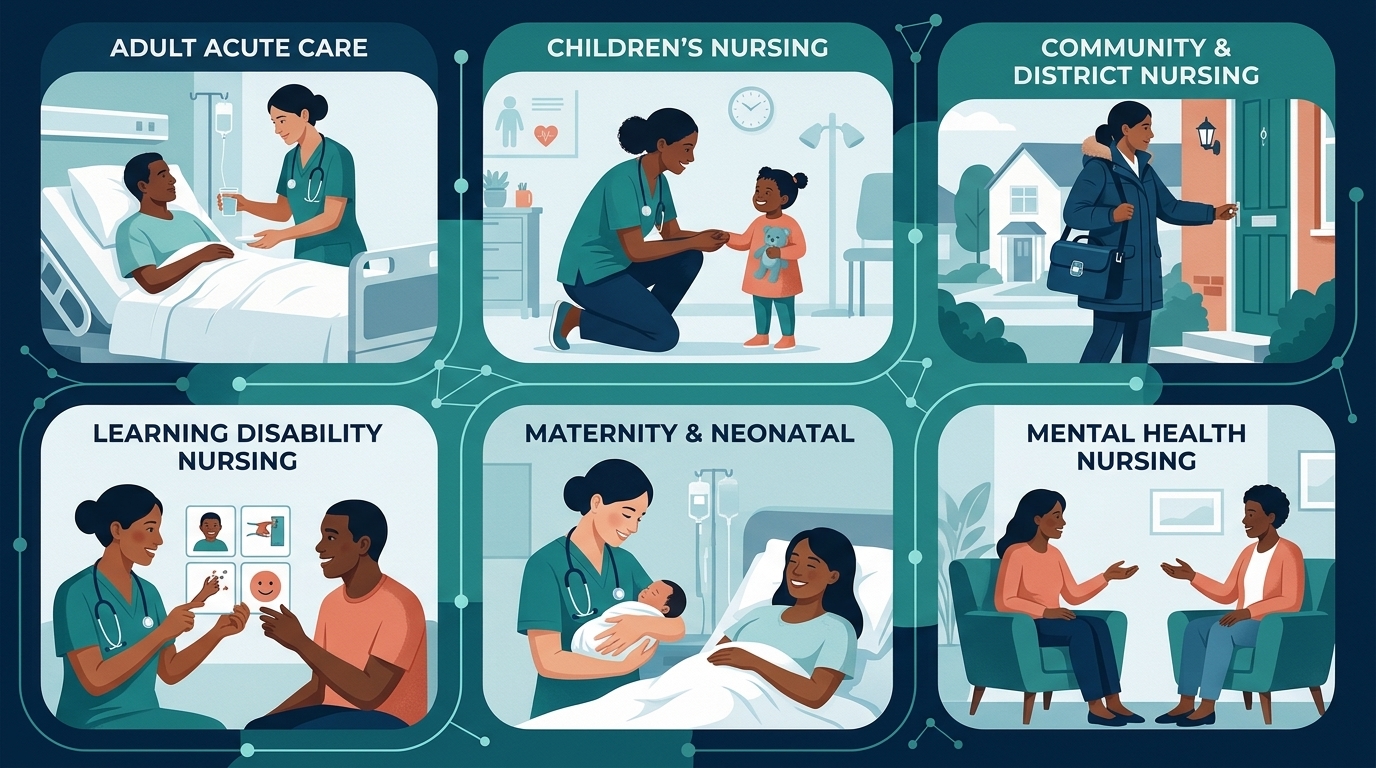
Accessible information — easy read drafts, appointment preparation, health passports and reasonable adjustments, checked with the person.
Capacity & acquiescence — apply the Mental Capacity Act; a "yes" to recording or a plan isn't always a free choice.
Diagnostic overshadowing — AI summaries can repeat old labels that hide pain, illness or distress, and voice tools may mishear speech differences.
People with a learning disability die younger than the general population, often from causes that could have been avoided with better care. National reviews through the LeDeR programme, including the corrected 2023 report republished in January 2026 (UK Parliament written statement), keep finding the same themes: communication barriers, diagnostic overshadowing, and reasonable adjustments not being made. AI could help close some of these gaps, or widen them.
Where AI can help
Accessible information
Drafting easy read, plain language and visual versions of appointment letters, health information and care plans. Always co-produce and check with people with a learning disability. See Accessible information.
Preparing for appointments
Visual stories, step-by-step guides and "what to expect" materials for procedures, hospital visits and health checks.
Health passports & one-page profiles
Drafting a clear structure from information the person and the people who know them provide. The content must be theirs.
Reasonable adjustments
Prompting staff to think through adjustments, such as longer appointments, a quiet space or a familiar supporter, before an appointment.
Where the risks are higher
| Risk | Why it matters in learning disability nursing |
|---|---|
| Consent and capacity | Some people may not have capacity to consent to being recorded by an AI scribe, or may agree without understanding. Apply the Mental Capacity Act 2005 to each decision, and support the person to decide wherever possible. |
| Acquiescence | People may say "yes" to please staff. A "yes" to a recording or a plan isn't always a free choice. |
| Speech recognition | AI scribes and voice tools may perform poorly for people with speech differences. Their own words may be the ones most likely to be lost or changed. |
| Diagnostic overshadowing | AI summaries can repeat "behaviour due to learning disability" from old records, hiding pain, illness or distress. |
| Easy read done badly | Simple words that miss the one thing the person needed to know, or pictures that don't match. Polished-looking easy read isn't the same as accessible. |
| Profiling | Risk tools trained on data that under-represents people with a learning disability can be less accurate for them. |
Rules and standards to know
- Accessible Information Standard (DAPB1605) and the Reasonable Adjustment Digital Flag (DAPB4019). NHS England has asked publicly funded health and care providers to fully implement the flag by 30 September 2026 (NHS England). AI-made materials should follow the needs recorded in the flag and in records.
- Mental Capacity Act 2005: assume capacity, support decision-making, respect unwise decisions, act in best interests and choose the least restrictive option.
- Equality Act 2010: the duty to make reasonable adjustments applies to AI-enabled services too.
Looking through the lenses
Person-centred practice
Was this made with the person and the people who know them best, or about them?
Ways of knowing
What do the person's family and support staff know that no record or AI summary captures?
Novice to expert
Do I know this person's usual communication well enough to spot when an AI output doesn't sound like them?
Try it
I'm a learning disability nurse. Draft an easy read guide for an adult with a
learning disability going for a blood test at their GP practice. Use short sentences,
one idea per line, and suggest a simple picture for each step. Include how to ask
for a break, and that they can bring someone they trust. Don't include any
medical advice beyond what happens during a blood test.
Then check it with people who use easy read before using it.
An AI tool summarises the historical hospital records of an adult with a learning disability who has presented with acute restlessness and grimacing, concluding: 'Challenging behaviour typical of patient's learning disability.' What critical risk must the nurse challenge?