- Educators
- Students
- Practice supervisors
- Programme leads
- NMC platform 1
- NMC platform 5
Teaching and learning
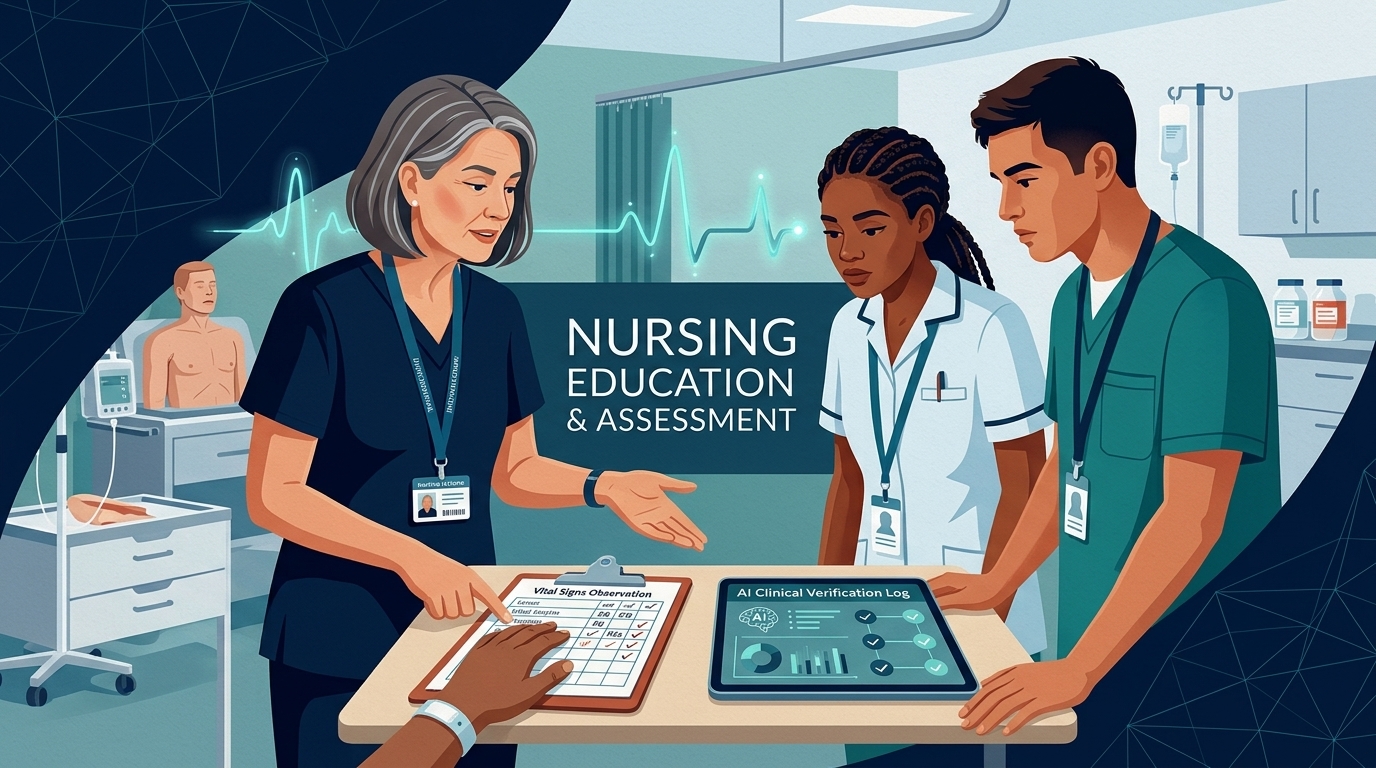
This section is for anyone teaching, supervising or learning nursing: university educators, programme leads, practice supervisors and assessors, preceptors and students. It is organised by stage of experience, using Benner's novice to expert model, because what is safe and useful changes as people gain experience.
Start with the curriculum & assessment blueprint
Curricula, Assessment & Supervision
Maps NMC standards (R1.1.7), Council of Deans (2026) Principles, the Two-Lane assessment model, and NMC SSSA placement supervision.
Interactive Lesson Planner
Generate structured 60-minute nursing session plans aligned to NMC platforms with built-in AI critique activities.
NMC Proficiency Map
Explore how AI literacy and digital health map across all 7 NMC Future Nurse platforms.
By stage of experience
| Stage | Useful approaches | Tools in this toolkit |
|---|---|---|
| Novice and advanced beginner (students, new registrants) | Simulated patients for communication practice; explanations checked against teaching; practice questions with rationales | Student prompt library, student activities, history taking |
| Competent (developing registrants) | Drafting and structuring work, with explicit checking; reflective practice | Person-centred checks, ways of knowing review |
| Proficient and expert (educators, supervisors, leads) | Designing learning and two-lane assessment; teaching others to question AI | Curricula & assessment guide, Lesson plan generator, educator prompt library, assessment prompts, NMC proficiency mapping |
Five principles for educators
- Teach the checking, not just the prompting. Assess how learners verify AI output against authoritative UK sources (NICE, BNF, Royal Marsden), not only what they produce.
- Make AI use visible. Ask learners to state when and how they used AI, and what errors or biases they corrected, using a structured verification log.
- Use deliberate errors. AI outputs with planted mistakes, omissions and biases build the clinical judgement that keeps people safe. See Spot the error.
- Keep core clinical assessments AI-free (Lane 1). Hands-on skills, OSCEs, numeracy, presence and bedside judgement need to be assured directly.
- Link to the Code and the proficiencies. Frame AI use in the language nurses will be held to. See NMC proficiency mapping.
Academic integrity and student equity
Follow your university's rules on AI in assessed work, and design AI-permitted activities around free or institutionally provided tools (such as university Microsoft 365 Copilot) so no student is disadvantaged by subscription costs.