Beyond text
- Nurses
- Students
- Educators
- Practice development leads
- NMC platform 1
- NMC platform 4
Accessible information
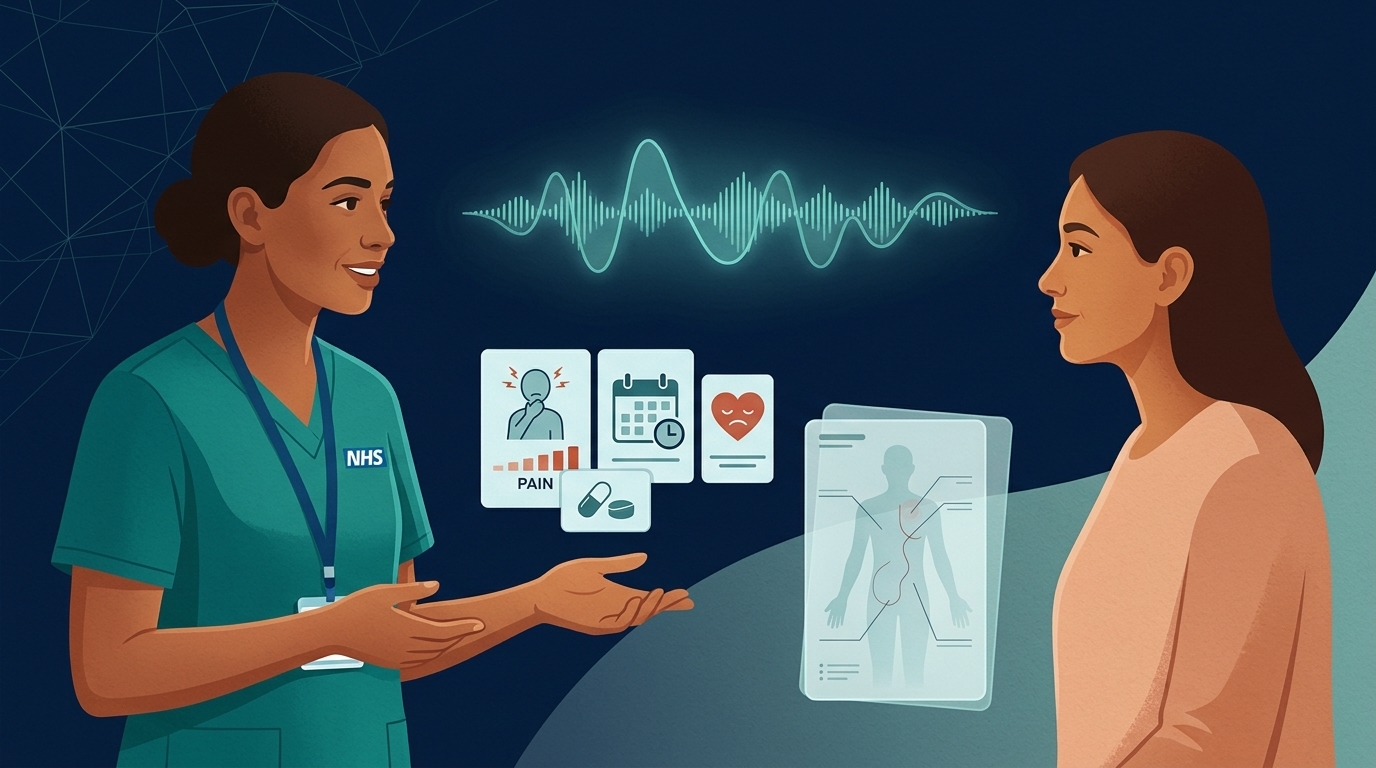
NHS Accessible Information Standard (DAPB1605) — AI can help draft Stage 5 formats, but never replaces co-production.
Always book a qualified spoken or BSL interpreter for clinical care — never rely on machine translation for consent or doses.
AI drafts of Easy Read must be checked with people with a learning disability so meaning is not lost.
AI can speed up making information accessible. But accessible information is a legal and professional duty, and getting it wrong harms the very people it is meant to include.
The Accessible Information Standard (DAPB1605) six-stage cycle
The Accessible Information Standard (DAPB1605) applies to NHS and publicly funded adult social care services in England (revised 2025).
Among its requirements are that information is provided in a format the person can understand, and that BSL and deafblind interpreters are appropriately qualified and registered (NHS England, Accessible Information Standard requirements).
AI can help with stage 5. It can't do stages 1 to 4 or 6 for you, and it can't decide what a person needs.
Where AI can help
| Format | How AI can help | Who must check it |
|---|---|---|
| Plain language | Rewriting at a lower reading age; removing jargon | You, against the original |
| Easy read | A first draft of short sentences with suggested pictures | People who use easy read, and an easy read specialist where available |
| Large print and other layouts | Reformatting documents | You: check nothing has been lost |
| Translation | A first draft for non-clinical information | A qualified translator for anything clinical |
| Alt text and transcripts | Describing images and transcribing audio or video | You: edit for meaning and accuracy |
Translation and interpreting
- A professional interpreter should be offered whenever language is a barrier to discussing health. Don't rely on family members, friends or children to interpret (Healthwatch).
- Machine translation is not a substitute for a qualified interpreter or translator in clinical conversations or clinical information. Errors in instructions, doses, consent or diagnoses can cause serious harm. NHS England's improvement framework for translation and interpreting services highlights the patient safety risks of AI translation apps, and calls for national guidance on when AI tools are and aren't suitable (NHS England, May 2025).
- If you must use a translation tool in an emergency before an interpreter is available, keep it to simple, non-critical messages, use only approved tools, and record that you did.
British Sign Language
AI signing avatars and BSL translation tools are developing, but deaf organisations have raised serious concerns about accuracy, the lack of training data for sign languages, and the deaf community's lack of involvement in their design (RNID, 2025). For health conversations, book a qualified, registered BSL interpreter.
Learning disability and easy read
AI drafts of easy read often get the style right and the substance wrong: words that are simple but vague, missing the one thing the person needed to know, or pictures that don't match. Co-produce easy read with people with learning disabilities, and test it with them. That's both the Accessible Information Standard and person-centred practice.
Try it
Rewrite the following discharge advice in plain English at a reading age of about 9.
Keep every instruction and its order. Don't add or remove any clinical information.
Then list every place where you changed the meaning, or weren't sure of it.
[paste the approved original, with no personal details]
A Deaf patient whose first language is British Sign Language (BSL) attends a pre-operative assessment for surgery. Can an AI translation or signing avatar app be used instead of booking a qualified, registered BSL interpreter?