Fields of nursing
- Nurses
- Students
- Educators
Children and young people's nursing
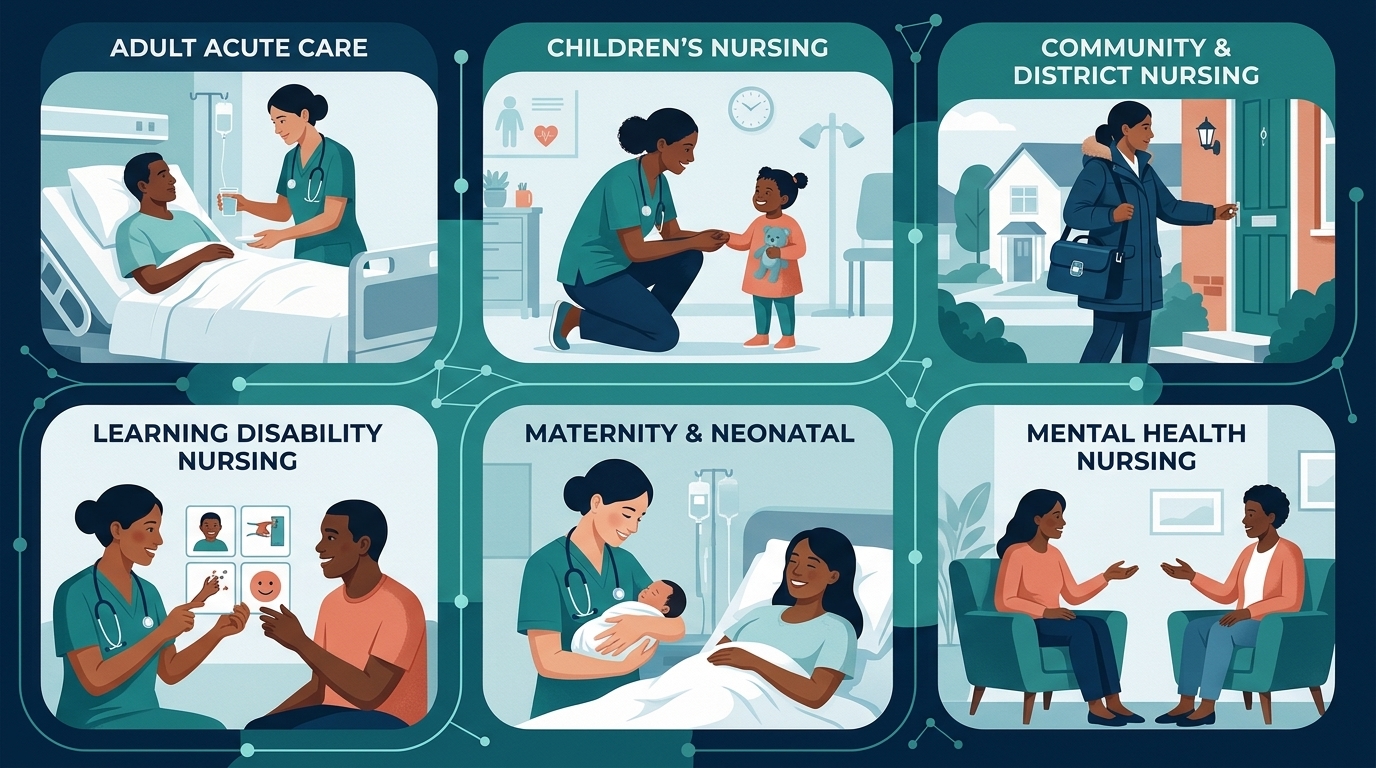
Child and family — care involves the child or young person and their parents or carers, and AI tools are rarely designed for children.
Gillick & confidentiality — under-16s may consent if Gillick competent, and AI recaps must not undermine what a young person keeps private.
No AI dosing — children's doses are weight-based and high-risk; use the BNF for Children and local policy, never AI.
Children's nursing always involves at least two voices: the child or young person, and their parents or carers. AI tools are rarely designed with children in mind, and children's data needs extra protection.
Where AI can help
Age-appropriate information
Drafting explanations at different ages and reading levels, with pictures or stories, for you to check and adapt.
Preparing children for procedures
"What will happen" stories and play-based explanations checked against unit protocols.
Information for families
Plain-language guides for parents and carers, from approved sources.
Transition to adult services
Drafting checklists and information to support young people moving to adult care.
Where the risks are higher
| Risk | Why it matters in children's nursing |
|---|---|
| Consent | Young people aged 16 and 17 are presumed able to consent. Children under 16 may consent if they are Gillick competent (NHS). Consent to AI recording needs the same care as consent to treatment, and the child's own view matters even when a parent agrees. |
| Confidentiality from parents | Young people may share things they don't want their parents to know. An AI summary or recap must not undermine that. |
| Safeguarding | Safeguarding concerns must follow local procedures and statutory guidance (Working Together to Safeguard Children). Never use AI to assess or decide on a safeguarding concern. |
| Children's data | Children's data deserves extra protection. The ICO's Children's code sets standards for online services likely to be used by under-18s (ICO). |
| Dosing | Children's doses are usually weight-based and high-risk. Never use AI for any dose calculation. Use the BNF for Children and local policy. |
| Young people using chatbots | Many young people use AI chatbots, including for health questions and emotional support. Ask about it without judgement. |
Looking through the lenses
Person-centred practice
Have I heard the child's or young person's own voice, not only the parent's?
Ways of knowing
Is this information right for this child's age, development and understanding?
Novice to expert
Can I spot when an AI explanation would frighten or confuse a child, even though it is accurate?
Try it
I'm a children's nurse. Write a short, reassuring explanation for a 7-year-old
about having a blood test. Use simple words, explain what they'll see and feel,
and include one thing they can do to help, such as choosing which arm.
Don't include any medical advice beyond what happens during a blood test.
A 15-year-old attending an adolescent clinic asks to speak with you privately for part of the consultation and does not want an AI ambient scribe recording their confidential disclosure. Their parent had already said 'Yes' to the AI scribe in the waiting room. What should you do?