Fields of nursing
- Nurses
- Students
- Educators
Mental health nursing
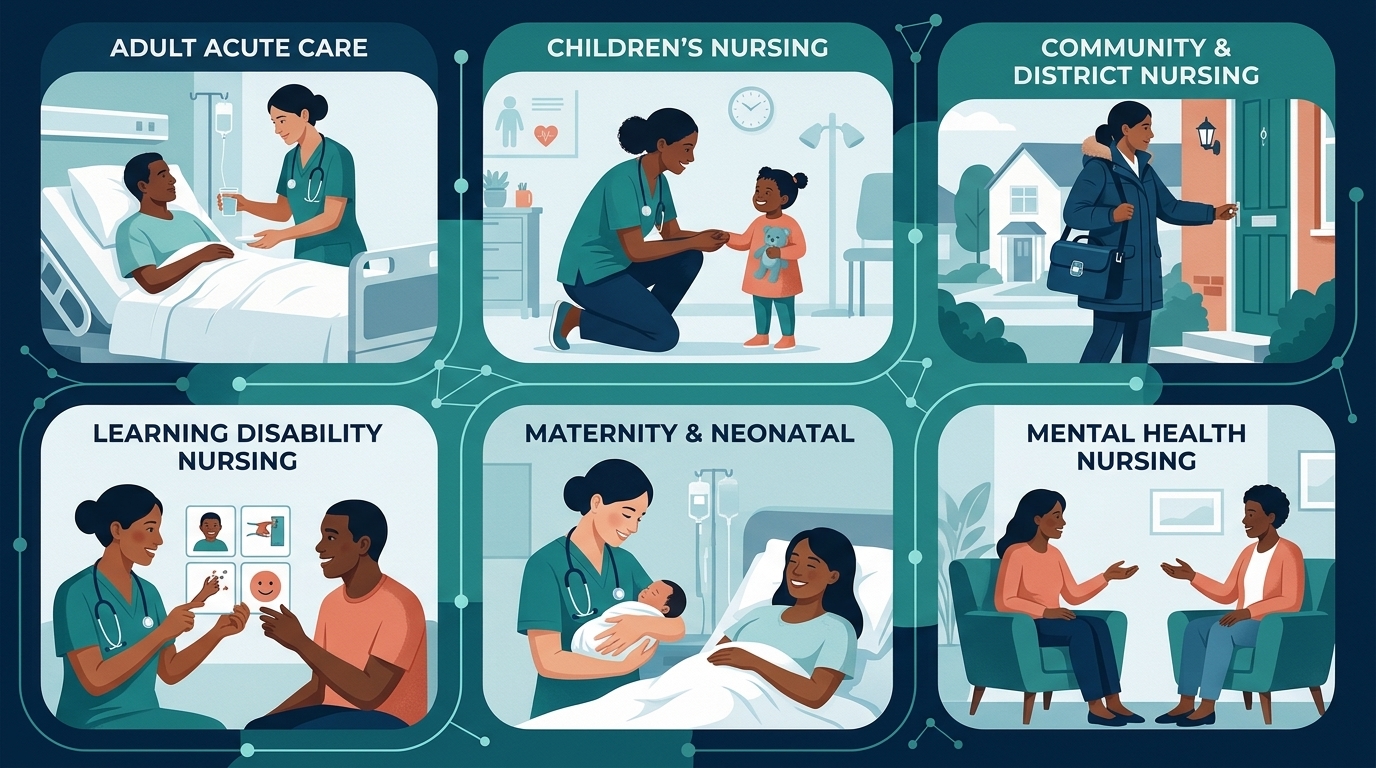
Relationships & language — the areas where AI is most tempting are also where it is most risky in mental health care.
No AI risk scores — AI must not score self-harm, suicide or violence risk unless it is an approved, clinically assured tool.
Stigma & detention — AI can harden stigmatising language, and Mental Health Act records must be checked line by line.
Chatbots for support — people may use general chatbots for emotional support; ask about it without judgement.
Mental health nursing is built on relationships, language and trust. Those are exactly the areas where AI is most tempting and most risky. The words people use about their distress, their histories and their risks are among the most sensitive information in health care.
Where AI can help
Administrative load
Drafting letters, summarising guidance and preparing for ward rounds or reviews from de-identified information, so there is more time with people.
Psychoeducation materials
Drafting accessible information on medicines, coping strategies or what to expect from services, checked against approved sources.
Recovery and care planning
Helping turn a person's own words into a clear, strengths-based plan. The plan must stay in their words.
Staff learning & reflection
Rehearsing de-escalation, preparing for difficult conversations, and structured reflection after incidents.
Where the risks are higher
| Risk | Why it matters in mental health nursing |
|---|---|
| AI scribes | Conversations may include trauma, self-harm, suicidal thoughts, abuse or offending. People may share less if they know they're being recorded. Capacity can fluctuate, and people who are detained may feel unable to refuse. Joint NHS England and Royal College of Psychiatrists guidance on AI scribes for people with mental health needs, learning disabilities and neurodivergent people was announced in 2026 (RCPsych). Check whether it has been published and follow it. |
| Language and stigma | AI summaries can harden stigmatising language ("non-compliant", "attention-seeking", "manipulative") and carry it forward from old records. |
| Risk assessment | AI must not be used to score or predict a person's risk of self-harm, suicide or violence unless it's an approved, clinically assured tool. Risk formulation is a relational, clinical judgement. |
| Detention and coercion | Decisions under the Mental Health Act have legal consequences. AI drafts of reports or records must be checked line by line, and decisions are yours and the multidisciplinary team's. |
| Inequalities | Racial disparities in detention are long-standing. In 2024-25, detention rates for Black or Black British people were nearly four times those for White people (NHS England, Mental Health Act statistics 2024-25). AI trained on historical records can reproduce them. See Equity and AI. |
| Chatbots used by people in distress | People may be using general chatbots for emotional support. Some responses can be unhelpful or unsafe. |
People using AI chatbots for support
Ask about it openly and without judgement, as you would about any other source of support:
- What do they use it for, and how does it help?
- Has it ever said anything worrying, or encouraged anything harmful?
- Do they know it isn't a person or a clinician, and that it can be wrong?
- Do they know how to reach human help in a crisis, such as NHS 111 (the mental health option) or 999 in an emergency?
Law and guidance to know
- Mental Health Act 1983, as amended by the Mental Health Act 2025, which received Royal Assent in December 2025 and is being brought in in phases. Check which changes are in force.
- Mental Capacity Act 2005 for decisions about consent, including consent to recording.
- NHS England guidance on AI scribes, and the forthcoming mental health-specific guidance above.
Looking through the lenses
Person-centred practice
Does this protect the therapeutic relationship, or put something between us?
Ways of knowing
Is this record fair to the person? Would they recognise themselves in it?
Novice to expert
Can I spot when an AI summary has made someone sound more risky, or less, than they are?
Try it
I'm a mental health nurse. Rewrite this anonymised paragraph from a care record
in respectful, person-centred, non-stigmatising language. Keep every fact. Don't
add or remove any information about risk. Then list each phrase you changed and why.
[paste anonymised text]
A person detained under the Mental Health Act is distressed and experiencing paranoia about surveillance. A colleague suggests turning on an AI ambient scribe during their 1:1 nursing review to save typing time. What is the safest clinical judgement?