Beyond text
- Nurses
- Educators
- Practice development leads
Video and avatars
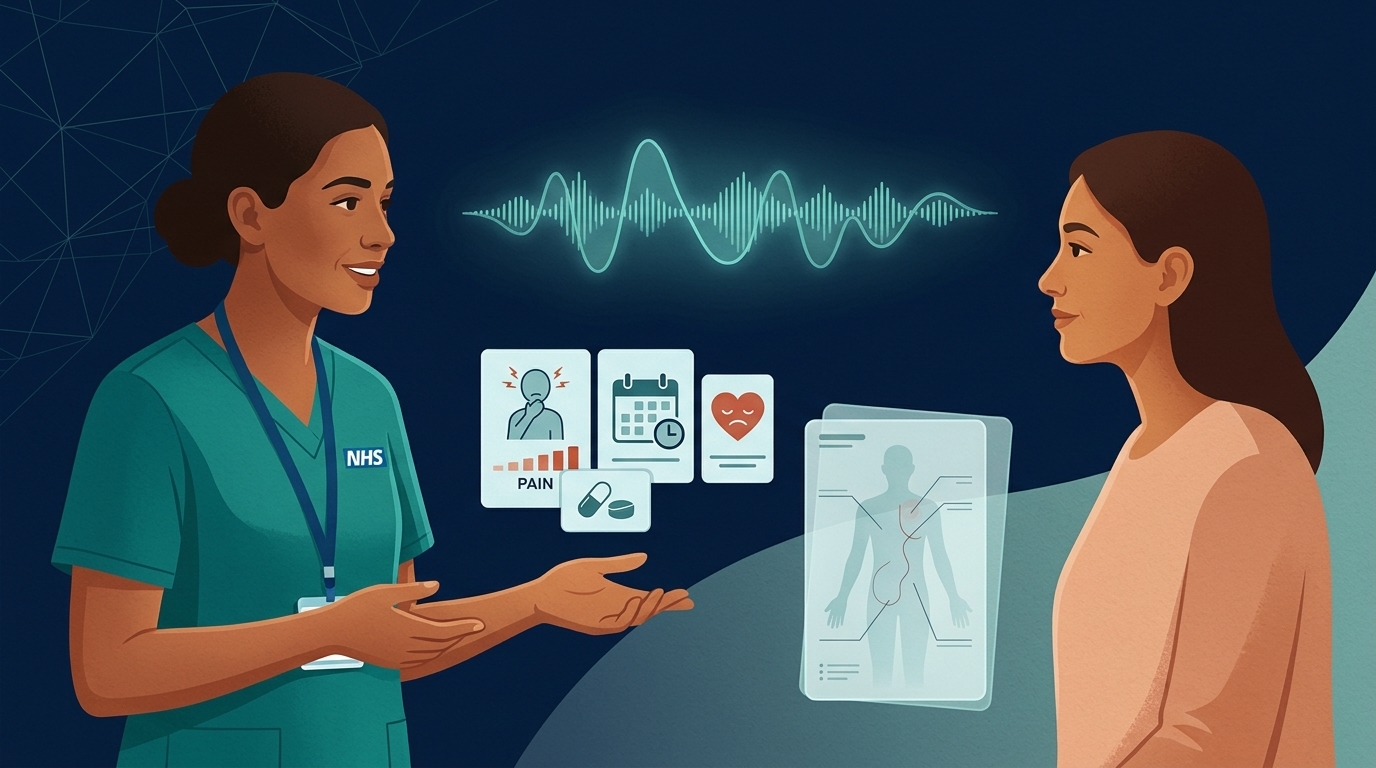
Write and clinically verify the script from UK guidance before generating any video or synthetic voice.
Under EU AI Act Article 50 & NHS good practice, clearly label synthetic presenters, avatars, and voices.
Support patients who bring convincing fake clinician videos by checking verified NHS/charity sources together.
AI can now produce short videos from a script, add a synthetic presenter or voice, and animate diagrams. It can also produce convincing fakes.
Where it helps vs. where it can cause harm
- Staff training: Short explainers on a process, a policy change or a piece of equipment, quickly updated when things change.
- Patient information: A short "what to expect" video before a procedure, alongside — not instead of — a human conversation.
- Simulation: Video-based scenarios for practising clinical recognition and response.
- False authority: A polished video with a synthetic presenter feels authoritative even when the clinical script is wrong.
- Likeness & consent: Never clone the voice or face of a real person without explicit consent and organisational approval.
- Deepfakes: Fake clinician videos promoting unsafe treatments or misinformation.
Where it can cause harm
| Risk | What it means for nurses |
|---|---|
| False authority | A polished video with a professional-looking presenter feels authoritative even when the content is wrong. |
| Likeness and consent | Never create an avatar or voice clone of a real person, including yourself, colleagues or patients, without explicit, informed consent and your organisation's approval. |
| Deepfakes | Fake videos or voices of clinicians, celebrities or officials promoting treatments, scams or misinformation. |
| Accessibility | Videos without accurate captions, transcripts or audio description exclude people. Auto-captions on clinical terms are often wrong. |
Deepfakes and the people you care for
People may bring you health claims from convincing videos: a "doctor" recommending a supplement, a "celebrity" promoting a weight-loss drug, or a fake NHS announcement. A useful approach:
- Take it seriously. The person found it convincing, and that's understandable.
- Check the source together. Is it from a verified NHS, charity or professional channel?
- Point to trusted sources such as NHS.uk and relevant charities, and explain why you trust them.
- Report it where it's a scam or dangerous, through the platform and, where relevant, to your organisation's communications team.
Good practice if you make videos
- Script first, from an authoritative source, and have the script checked before any video is made.
- Label AI-generated presenters and voices clearly.
- Caption and transcribe, and check captions for clinical terms.
- Date the video and set a review date, because guidance changes.
- Never imply a real person said something they didn't.
An educator uses an AI avatar tool to create a 2-minute 'What to expect before your endoscopy' explainer video from an approved hospital leaflet. Before sharing the video, which checks are essential?