- Nurses
- Students
- Educators
Beyond text
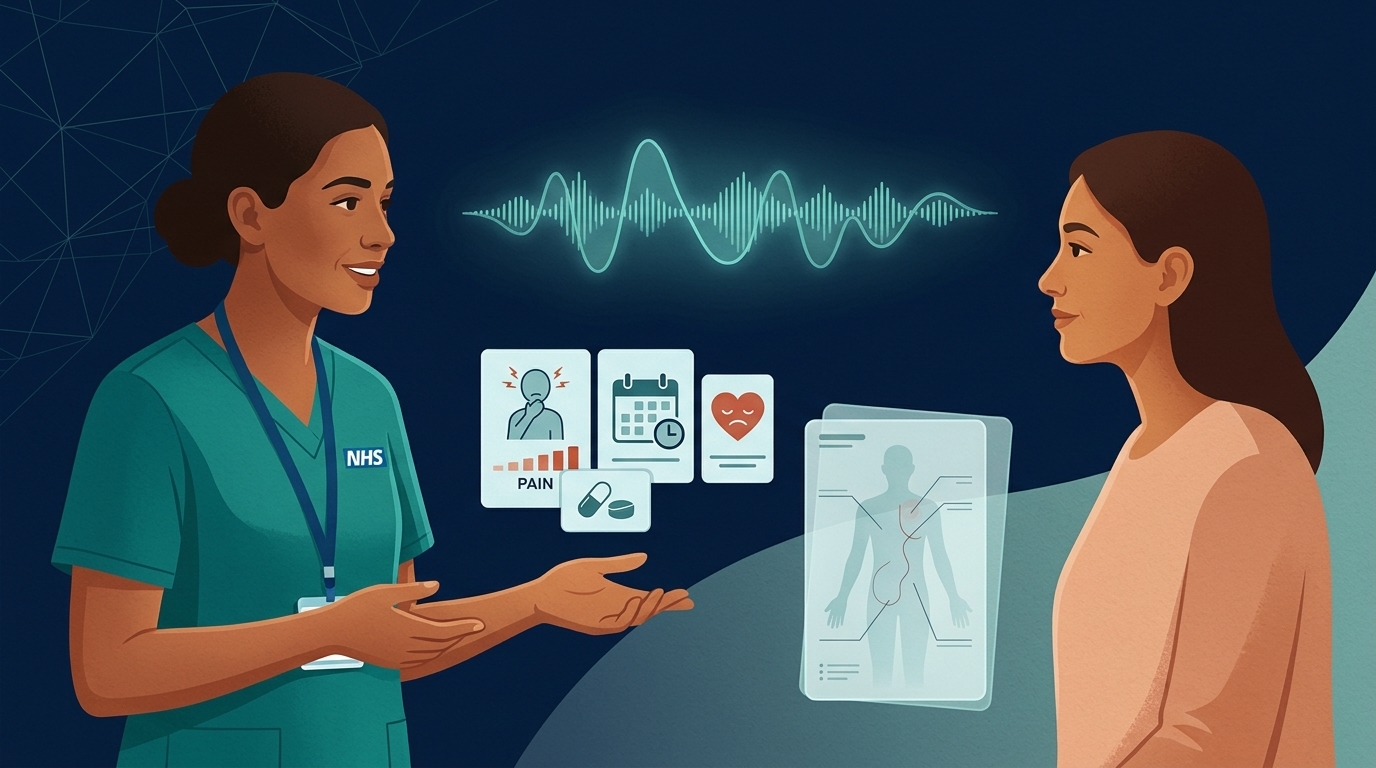
AI no longer only reads and writes. It can listen, speak, make pictures, produce video and turn one format into another. For nursing this matters, because so much of care isn't written down: it's spoken, shown, demonstrated and sensed.
This section looks at each mode in turn, using the toolkit's nursing process and three lenses.
Explore the four modes
Voice & ambient scribes
Where it helps: AI scribes, dictation, rehearsing difficult conversations, voice-led study.
Main risk: Consent in clinical spaces, misheard medication names, accent and speech differences.
Images & clinical diagrams
Where it helps: Teaching visuals, simulated scenarios, writing descriptive alt text.
Main risk: Uploading identifiable clinical photos, anatomical hallucinations, skin-tone bias.
Video & avatars
Where it helps: Staff training clips, simulated patient briefings, discharge explainers.
Main risk: Likeness consent, synthetic authority masking clinical errors, loss of human reassurance.
Accessible formats & Easy Read
Where it helps: Easy Read drafts, plain-English summaries, Reasonable Adjustment Digital Flag alignment.
Main risk: Confident clinical or translation errors in a format the recipient cannot independently verify.
Modes at a glance
| Mode | Where it can help | The main risk | Page |
|---|---|---|---|
| Voice | AI scribes, dictation, rehearsing conversations, voice-led study | Consent, mishearing, accents and speech differences | Voice |
| Images | Patient education visuals, teaching diagrams, alt text | Identifiable photos, anatomical errors, who is shown and how | Images |
| Video and avatars | Explainer videos, simulation, staff training | Consent for likenesses, deepfakes, false authority | Video and avatars |
| Accessible formats | Easy read drafts, plain language, translation drafts, large print | Confident errors in a format the person can't check | Accessible information |
Across the nursing process
| Stage | Examples beyond text |
|---|---|
| Assess | An AI scribe drafting notes from a conversation; rehearsing an assessment with a voice-based simulated patient |
| Plan | A visual summary of a care plan that a person and family can follow |
| Implement | Easy read discharge information; a short video on using a device; a diagram explaining a procedure |
| Evaluate | Checking that accessible versions match the original; asking people whether the format worked for them |
Three questions for any mode
- Person: was this format chosen with the person, based on their recorded communication needs, rather than for them?
- Knowing: has someone with the right expertise checked it? That means clinical accuracy for content, and people who use the format for accessibility.
- Stage: are you experienced enough in this mode to spot what is wrong? A fluent voice, a polished image or a professional-looking video is easy to trust too much.
A paragraph of text with an error looks like it might have an error. A confident voice, a crisp diagram or a professional video doesn't. Polish isn't evidence.