The nursing process
Case Study: The Deteriorating Patient
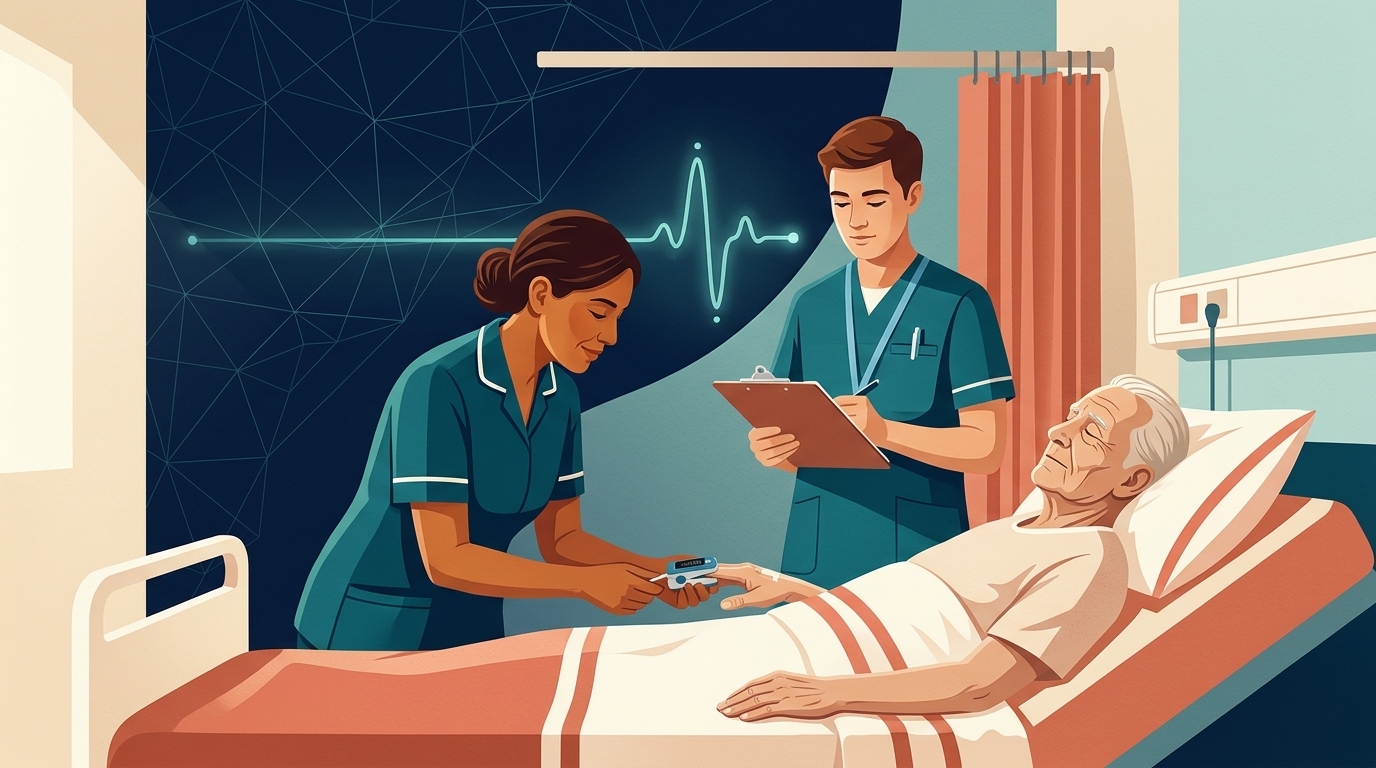
Students — practising trend recognition and SBAR escalation with a fully synthetic sepsis simulation.
Hour-by-hour simulation — the AI worsens observations so students decide when to call the doctor.
No real NEWS2 by chatbot — escalate using the RCP NEWS2 chart and NICE NG51, never AI reassurance.
Scenario & Simulation Brief
Simulated Patient Persona: "Sarah" (30yo, Post-Appendectomy Sepsis Trend)
Recognising physiological deterioration early is a critical safety skill. In this simulation, the AI models worsening observations hour by hour so students practise trend recognition and structured SBAR escalation.
HR 88 · BP 110/70 · RR 18 · Temp 37.5°C · SpO2 98% on air · Alert
Post-operative baseline looks reassuring overall, with mild low-grade pyrexia (37.5°C). Students establish baseline observations and wound/pain check.
Act as a simulation engine. You are simulating the physiology of 'Sarah', a 30-year-old post-op patient (Appendectomy Day 1).

Initial Vitals (09:00):
* HR: 88
* BP: 110/70
* RR: 18
* Temp: 37.5
* O2: 98% on Air

I am the student nurse. I will come to check on you every 'hour' (simulation time).

Simulation Logic:
Sarah is developing Sepsis. Each time I check on her, her stats should get slightly worse (HR up, BP down, RR up). She should become more confused.

Goal:
I need to recognise the deterioration and decide when to 'Call the Doctor'.
If I choose to 'Call the Doctor', ask me to provide an SBAR handover.

Start the simulation at 09:00. Describe how Sarah looks.What the AI Said vs. What the Nurse Checked
“Sarah (30yo, Day 1 post-appendectomy) now has RR 24, HR 114, BP 96/58, Temp 38.4°C and new confusion. Observations remain borderline stable; continue routine 4-hourly monitoring.”
NEWS2 is 9 (high clinical risk, including 3 for new confusion) — trigger immediate urgent medical review / 2222 sepsis pathway per NICE NG51.
Clinical & Learning Outcome
Trend Recognition
Spotting the physiological trend (rising HR, RR and temperature with falling BP) rather than treating single values in isolation.
Escalation
Knowing when a rising NEWS2 score and new confusion require immediate MET / 2222 escalation and Sepsis Six action.
Communication
Delivering a concise, structured SBAR handover when the simulated Doctor requests urgent clinical review.
Remind students that in real life, a NEWS2 score of 5 or 7 requires immediate protocol-driven action (Oxygen, Sepsis Six). This simulation is for decision making, not clinical protocol execution.
Quick self-check: Physiological Trends & Escalation
In this simulation, Sarah's observations shift from RR 18, HR 88, BP 110/70 at 09:00 to RR 24, HR 114, BP 96/58, Temp 38.4°C with new confusion. Why is relying on a general AI chatbot to calculate her NEWS2 or triage urgency unsafe in real clinical practice?